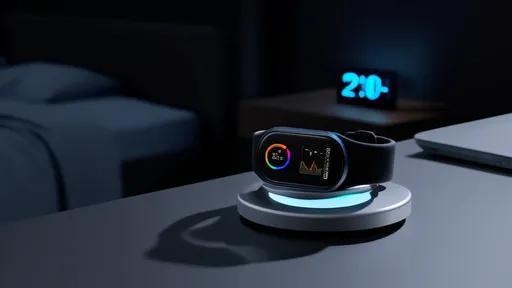
In the rapidly evolving landscape of wearable technology, the synchronization of health data during smartwatch charging periods has emerged as a critical yet often overlooked aspect of user experience. While most users focus on battery life and activity tracking, the behind-the-scenes data transfer that occurs when these devices are powered down for charging holds significant implications for health monitoring accuracy and user convenience. This process represents a sophisticated interplay between hardware efficiency and software intelligence, ensuring that valuable biometric information seamlessly integrates with health platforms even during downtime.
The architecture supporting this synchronization relies on advanced power management systems that allocate minimal energy reserves specifically for data transmission. When a user places their device on its charger, the firmware initiates a prioritized sequence where unfinished data packets from the most recent activities are transmitted before the main battery begins accepting significant charge. This clever sequencing prevents data loss from interrupted workouts or sleep tracking sessions that might have occurred just before charging. Manufacturers have developed proprietary algorithms that determine which data points require immediate transmission versus those that can be temporarily cached, creating an optimized flow that balances energy conservation with data integrity.
Modern smartwatches employ what industry experts call intelligent charging synchronization protocols that go beyond simple data dumping. These systems perform preliminary data validation checks before transmission, flagging potential outliers or corrupted data points that might skew health trend analysis. The synchronization process during charging also allows for more robust encryption protocols to be implemented since power constraints are temporarily lifted, enabling stronger security measures for sensitive health information. This results in more secure transmission of personal health data to cloud services compared to the intermittent wireless syncs that occur throughout the day when the device is operating on battery power.
The timing of these synchronization events is strategically important. Research indicates that most users charge their devices during predictable windows—typically overnight or during morning routines. Device manufacturers have capitalized on these patterns by scheduling comprehensive system diagnostics and firmware updates to coincide with charging periods. This approach ensures that health data synchronization occurs alongside other maintenance tasks, creating a consolidated downtime management system that minimizes active processing during waking hours. The result is a device that performs optimally during usage periods without sacrificing data completeness or system health.
From a user perspective, the effectiveness of charging-time synchronization directly impacts the reliability of health trend analysis. Continuous data streams without charging gaps enable more accurate long-term assessments of sleep patterns, heart rate variability, and activity levels. This becomes particularly crucial for users who rely on these devices for medical monitoring, where missing data segments could compromise trend analysis. The seamless integration of charging-period synchronization means that users never need to manually initiate data transfers or worry about losing information during these necessary power replenishment cycles.
Technical challenges in this domain include managing heat generation during simultaneous charging and data transmission, preventing data corruption from power fluctuations, and maintaining Bluetooth or Wi-Fi connectivity stability throughout the process. Engineering teams have addressed these issues through sophisticated thermal management systems, redundant data storage mechanisms, and connection protocols that automatically reestablish links if interrupted. These solutions work together to create a reliable synchronization environment that users can depend on without needing to understand the underlying complexity.
The future development of charging synchronization technology points toward even more sophisticated implementations. Emerging research focuses on predictive synchronization, where devices anticipate charging schedules based on user behavior and preemptively prepare large data batches for transfer. Another developing area involves adaptive compression algorithms that reduce transmission time and energy usage based on network conditions and data priority. These advancements will further enhance the efficiency and reliability of health data management, making the synchronization process increasingly transparent to users while maintaining the integrity of their health information.
As smartwatch technology continues to evolve, the significance of charging-time data synchronization will only increase. With devices capturing more diverse health metrics and users becoming more reliant on long-term trend data, the invisible processes that occur during these downtime periods form the backbone of effective health monitoring. The successful implementation of these systems represents a remarkable achievement in wearable technology—one that ensures users receive continuous, accurate health insights without having to think about the complex data management happening just out of sight.

By /Aug 26, 2025
By /Aug 26, 2025
By /Aug 26, 2025
By /Aug 26, 2025

By /Aug 26, 2025
By /Aug 26, 2025

By /Aug 26, 2025
By /Aug 26, 2025
By /Aug 26, 2025
By /Aug 26, 2025

By /Aug 26, 2025

By /Aug 26, 2025

By /Aug 26, 2025

By /Aug 26, 2025

By /Aug 26, 2025

By /Aug 26, 2025

By /Aug 26, 2025

By /Aug 26, 2025

By /Aug 26, 2025

By /Aug 26, 2025