In the ever-evolving landscape of coffee craftsmanship, cold brew has carved out a significant niche, celebrated for its smooth, low-acidity profile and refreshing character. Yet, behind its seemingly simple preparation—coarse grounds steeped in cold water for an extended period—lies a complex interplay of variables that dictate the final cup's quality and efficiency. The extraction efficiency in cold brewing is not governed by a single factor but by a delicate three-dimensional relationship between time, temperature, and grind size. Mastering this triad is essential for both home enthusiasts and commercial producers aiming to optimize flavor, consistency, and resource utilization.
Unlike its hot-brewed counterparts, cold brew extraction occurs without the application of heat, which dramatically slows down the dissolution of soluble compounds from coffee grounds. This fundamental difference shifts the focus from minutes to hours, or even days, and places greater emphasis on grind consistency and water chemistry. The goal is to achieve a balanced extraction where desirable sugars, oils, and aromatic compounds are efficiently pulled without over-extracting bitter tannins or under-extracting sweetness. Each variable in the time-temperature-grind matrix influences the others, creating a dynamic system where adjustments must be made holistically rather than in isolation.
Time is perhaps the most intuitive variable in cold brew extraction. Extended steeping periods, typically ranging from 12 to 24 hours, are necessary to compensate for the lack of thermal energy. However, time is not a standalone savior; its effectiveness is heavily dependent on grind size and temperature. Longer steeping can enhance body and sweetness but risks introducing off-flavors if the grind is too fine or if the temperature fluctuates. Shorter times may preserve brighter notes but often result in a thin, underdeveloped brew if not paired with finer grinds or slightly elevated temperatures. The key is to find a temporal sweet spot that aligns with other parameters to maximize efficiency without compromising quality.
Temperature, though often fixed at "cold" in traditional recipes, is far from a constant. While most cold brews are made with water between 35°F and 70°F (2°C to 21°C), even slight variations within this range can significantly alter extraction kinetics. Colder temperatures slow molecular movement, requiring longer times for equivalent extraction, whereas warmer temperatures accelerate dissolution, potentially reducing steeping duration. Some producers experiment with hybrid approaches, such as starting with a slightly warmer water to kickstart extraction before cooling, or storing the brew in environments with controlled temperatures to maintain consistency. The interplay between temperature and time is particularly critical; a 10-degree increase might cut brewing time in half, but it could also shift the flavor profile toward more acidic or bitter compounds if not carefully managed.
Grind size serves as the structural foundation of the extraction process. In cold brew, a coarser grind is generally preferred to minimize over-extraction and sediment, but this choice directly impacts the required time and temperature. Coarser grinds have less surface area, slowing down extraction and necessitating longer steeping or slightly higher temperatures to achieve full dissolution. Conversely, finer grinds increase surface area, speeding up extraction but raising the risk of astringency and clogging filters. The optimal grind size is thus a compromise between efficiency and clarity, often tailored to the specific brewing method—immersion versus slow drip, for instance—and desired flavor outcomes. Uniformity is crucial; inconsistent grinds can lead to simultaneous under- and over-extraction, muddying the final cup.
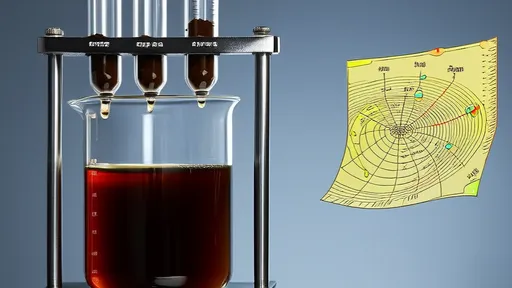
The three-dimensional relationship between these variables is nonlinear and often counterintuitive. For example, increasing grind fineness might allow for a shorter brew time, but if the temperature is too low, the extraction may still be incomplete. Similarly, raising the temperature could reduce time, but if the grind is too coarse, the gains might be negligible. This interdependency means that optimizing cold brew efficiency requires a experimental, iterative approach. Small batches with precise measurements and tasting notes are invaluable for mapping the unique behavior of each coffee origin, roast level, and water composition.
Practical applications of this triad abound in both home and commercial settings. Home brewers might start with a standard recipe—say, a medium-coarse grind at 40°F for 18 hours—and then adjust one variable at a time. If the brew tastes weak, they could try a slightly finer grind or extend the time by two hours while keeping temperature constant. Commercial operations, where scale and consistency are paramount, often use controlled environments with stable temperatures and automated grinding systems to ensure reproducibility. Data-driven tools, such as extraction yield calculators and refractometers, help quantify efficiency, taking the guesswork out of the process.
Emerging research and technological innovations continue to refine our understanding of cold brew dynamics. Studies using high-performance liquid chromatography (HPLC) have shown how different time-temperature-grind combinations affect the concentration of specific compounds like caffeine, chlorogenic acids, and sugars. Meanwhile, new equipment—from adjustable burr grinders with enhanced uniformity to immersion brewers with temperature control—is making it easier than ever to manipulate these variables precisely. The future of cold brew may see even more personalized approaches, where algorithms recommend optimal parameters based on real-time feedback from sensors embedded in brewing devices.
Ultimately, the journey to perfect cold brew is as much art as science. While the time-temperature-grind relationship provides a framework for efficiency, the final arbiter remains sensory experience. A brew that measures perfectly on a refractometer might still lack soul if it doesn’t delight the palate. Thus, the most successful practitioners are those who blend empirical data with intuitive tasting, continuously refining their process through curiosity and patience. In the end, whether crafted in a kitchen or a café, cold brew offers a testament to the beauty of slow transformation—a reminder that some things, like flavor, are worth waiting for.
By /Aug 29, 2025
By /Aug 29, 2025

By /Aug 29, 2025
By /Aug 29, 2025
By /Aug 29, 2025
By /Aug 29, 2025
By /Aug 29, 2025
By /Aug 29, 2025
By /Aug 29, 2025
By /Aug 29, 2025
By /Aug 29, 2025
By /Aug 29, 2025
By /Aug 29, 2025
By /Aug 29, 2025
By /Aug 29, 2025
By /Aug 29, 2025
By /Aug 29, 2025
By /Aug 29, 2025
By /Aug 29, 2025
By /Aug 29, 2025